

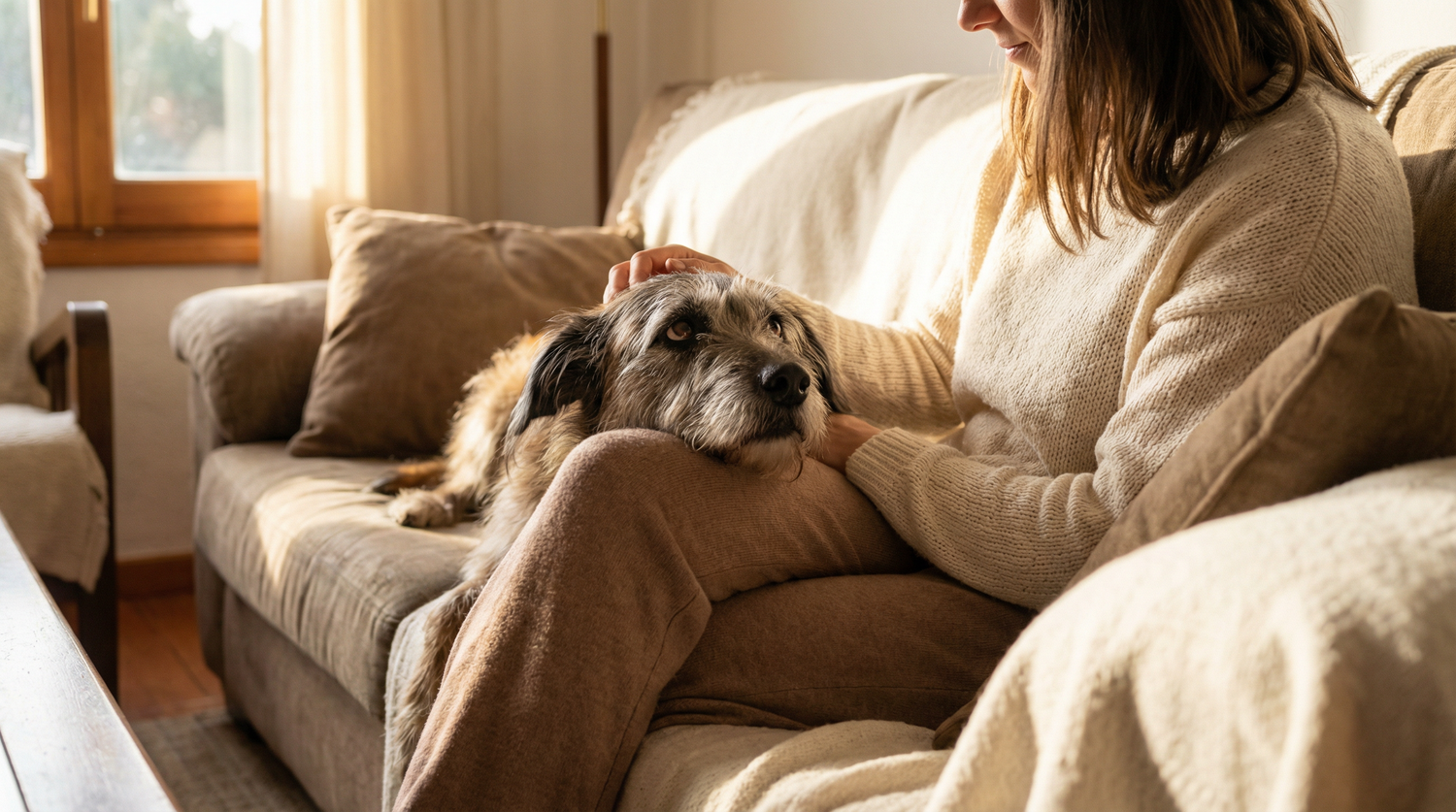
11 Benefits of Adopting a Rescue Dog (From Someone Who Did)
Everyone tells you to adopt. What they don't tell you: it's harder than they say, and better than they promise. This is the version nobody writes — the one from someone who actually lived it.
The Benefits Everyone Talks About
Yes, these are real. But they deserve more than a bullet point.
You Save a Life. Literally.
This one gets thrown around so casually that it loses its weight. So let's sit with the actual numbers. According to the ASPCA's shelter statistics, approximately 5.8 million dogs and cats enter U.S. shelters every year. In 2024, 334,000 dogs were euthanized — not because they were sick or dangerous, but because there wasn't room and there wasn't someone to choose them.
Your dog was almost a statistic. Think about that the next time they're snoring on your feet.
About 2 million dogs were adopted from shelters in 2024. Your adoption is part of that number. That matters.
It Costs Less Than You Think
The average adoption fee runs $50–$400. The average cost of buying from a breeder? $2,000–$5,000, sometimes more for popular breeds. And that's before the first vet bill.
Most rescue dogs come already spayed or neutered, vaccinated, microchipped, and heartworm-tested. You're not just saving money — you're skipping the scramble of a puppy's first year of medical appointments.
Mixed Breeds Are Medically Resilient
Purebred dogs are often bred for aesthetics over health, and generations of that show up in vet bills. Mixed breeds — which make up the majority of shelter dogs — benefit from what geneticists call hybrid vigor: broader genetic diversity that tends to mean fewer inherited conditions. Your scruffy mystery mutt may well outlive the pedigree dog down the street.
The Benefits Nobody Tells You About
Here's where the generic shelter website stops. Here's where we keep going.
1. The Gratitude Is Different
A dog who grew up in a loving home from puppyhood doesn't know anything else. That's not a criticism — it's just context. A rescue dog who spent months on a concrete kennel floor, eating at scheduled times, sleeping under fluorescent lights — that dog knows the difference between before and after. And they show it.
It's in the way they look at you sometimes. Just stop what they're doing, look up, and hold eye contact for a second too long. Like they're checking that you're still there. That you're still real. It will break you open in the best possible way.
2. You Become a More Patient Person
You didn't know you had this kind of patience. Nobody does until they need it.
Some rescue dogs come home and decompress beautifully. Others take weeks to stop flinching at sudden movements, months to stop guarding their food bowl, a full year to finally approach strangers without tucking their tail. You learn to meet them where they are. You learn that progress isn't linear. You learn that trust — real trust — can't be rushed.
That lesson does not stay at the dog park. It follows you into your relationships, your work, your entire life.
3. You Find Your People
Rescue dog moms find each other. It's one of the quiet, unexpected reasons to adopt a shelter dog that nobody puts on a poster.
It starts at the dog park: "Where did you get him?" becomes "Where did you rescue from?" — and suddenly you're twenty minutes deep into someone else's adoption story and you've both cried a little. It lives in Facebook groups where people post middle-of-the-night questions about separation anxiety and fifty strangers answer immediately. It shows up in the DMs of people who saw your dog's adoption post and said "we have a dog from that same shelter." The community is real, and it's made of exactly the kind of people you want in your corner. Why rescue dog moms are a different breed — that's a whole other conversation worth having.
4. You Stop Caring About Breed
"What breed is that?" becomes your least favorite question. Not because it's rude — it isn't — but because the answer feels so beside the point.
Before you adopted, you maybe had a list. A breed you'd always wanted. A specific look, a specific size. After? You look at your dog and the thought of a different dog — a cuter dog, a fancier dog, a dog you could show at Westminster — is genuinely laughable. They're that dog. That's it. That's all.
5. Your Perspective Shifts Permanently
You start seeing shelter dogs everywhere. In the Petfinder listings you open compulsively at 11pm. In the "urgent" foster posts shared by rescue organizations. In the faces of dogs in adoption posts that you can't take home, and you feel the weight of that in a way you didn't used to.
This isn't a guilt trip — it's empathy, fully activated. Once you've adopted, you understand the stakes in a way that's hard to explain to someone who hasn't. You become part of a larger picture. You understand what the full adoption statistics actually mean in individual lives.
6. The First Time They Sleep on the Bed
You'll know exactly when it happened. Maybe it was day four. Maybe it was month three.
A dog who spent months — maybe years — on a shelter floor, choosing to jump up, turn a circle, and settle in next to you. Choosing to close their eyes with you right there. That is not nothing. That is a dog deciding you are safe. That they are safe. That this is home. You will remember exactly where you were and what you thought the first time that happened. It will be one of the better moments of your life.
7. They Teach You About Resilience
Some rescue dogs come with histories you'll never fully know. Signs of neglect. Signs of abuse. Fear responses that don't make sense until suddenly, heartbreakingly, they do.
Watching a dog who had every reason not to trust, learn to trust — watching them go from flinching to leaning into your hand — is the most quietly incredible thing you will ever witness. They don't carry bitterness. They don't punish you for what someone else did. They just keep moving toward the warmth. Every single day. That's a lesson. You'd be lucky to be half that resilient.
The Hard Parts (That Are Still Worth It)
Let's be honest here, because you deserve honesty more than you deserve a sales pitch.
Some rescue dogs come with behavioral issues — reactivity, resource guarding, separation anxiety, fear of men, fear of children, fear of garbage bags, which you won't discover until garbage day. You may not know your dog's full history. You may be surprised at the vet — conditions discovered months in, things nobody knew to check for because nobody knows how long they were in the shelter system before you found them.
The adjustment period is real. The "3-3-3 rule" — three days to decompress, three weeks to learn your routine, three months to feel at home — is real for some dogs. For others, it takes longer. You will have moments of doubt. You will google "did I make a mistake adopting a dog" at 2am. Almost every rescue dog mom has.
Here's the reframe: every hard thing your dog carries is evidence of what they survived to get to you. The flinch, the food guarding, the waking you up at 3am — all of it is a map of a life before you. And now there's a life with you. That's the whole story, and every hard chapter in it is worth telling.
How to Support Rescue Dogs (Even If You Can't Adopt Right Now)
Adopting isn't always possible — living situation, allergies, schedule, finances. That doesn't mean you're out of the picture.
- Foster: Short-term fostering saves lives directly. You give a dog a bridge between the shelter and their permanent home — and you learn a lot about yourself in the process.
- Volunteer: Shelters always need walkers, socializers, and transport drivers. An hour a week matters more than you know.
- Donate: Organizations like rescue organizations work directly with shelters to fund food, medical care, and adoption programs.
- Buy with purpose: DogMom.com's rescue dog clothing collection exists because we believe dog moms can save dogs. Every purchase funds shelter dog meals to help feed shelter dogs — so wearing your rescue pride actually does something.
If you want to understand what being a dog mom means at its core — this is it. Showing up for the ones who need it, in whatever way you can.
So. Should You Adopt?
Adopt if you can. Give it everything you've got — because they will.
And if you already did? You already know that everything in this post is true. You knew it the first time your rescue dog climbed up next to you, sighed, and finally let themselves rest.
That's the benefit nobody puts on a poster. The one that makes it all worth it.
Frequently Asked Questions
What are the real benefits of adopting a rescue dog?
Beyond saving a life and lower costs, the real benefits of adopting a rescue dog include a uniquely deep bond built on earned trust, patience and empathy that changes you as a person, connection to a passionate community of fellow rescue dog owners, and the profound experience of watching a dog choose safety and love after hardship.
Why adopt a rescue dog instead of buying from a breeder?
Adoption fees ($50–$400) are significantly lower than breeder costs ($2,000–$5,000). Rescue dogs usually come already spayed/neutered, vaccinated, and microchipped. They also tend to be mixed breeds, which typically come with fewer inherited health conditions than purebreds. And 334,000 dogs were euthanized in U.S. shelters in 2024 — adoption directly reduces that number.
Is it harder to bond with a rescue dog?
Not harder — different. Some rescue dogs bond quickly; others need weeks or months to feel safe. The bond that forms through that process is often described by rescue dog owners as uniquely deep, precisely because it was built slowly, on the dog's terms.
What should I know before adopting a rescue dog?
Know that there may be an adjustment period (the 3-3-3 rule is a helpful framework). Know that behavioral quirks may surface once the dog is home. Know that unknown history means occasional surprises at the vet. And know that almost every rescue dog owner who was warned about the hard parts will tell you: completely worth it.



Leave a comment
This site is protected by hCaptcha and the hCaptcha Privacy Policy and Terms of Service apply.