

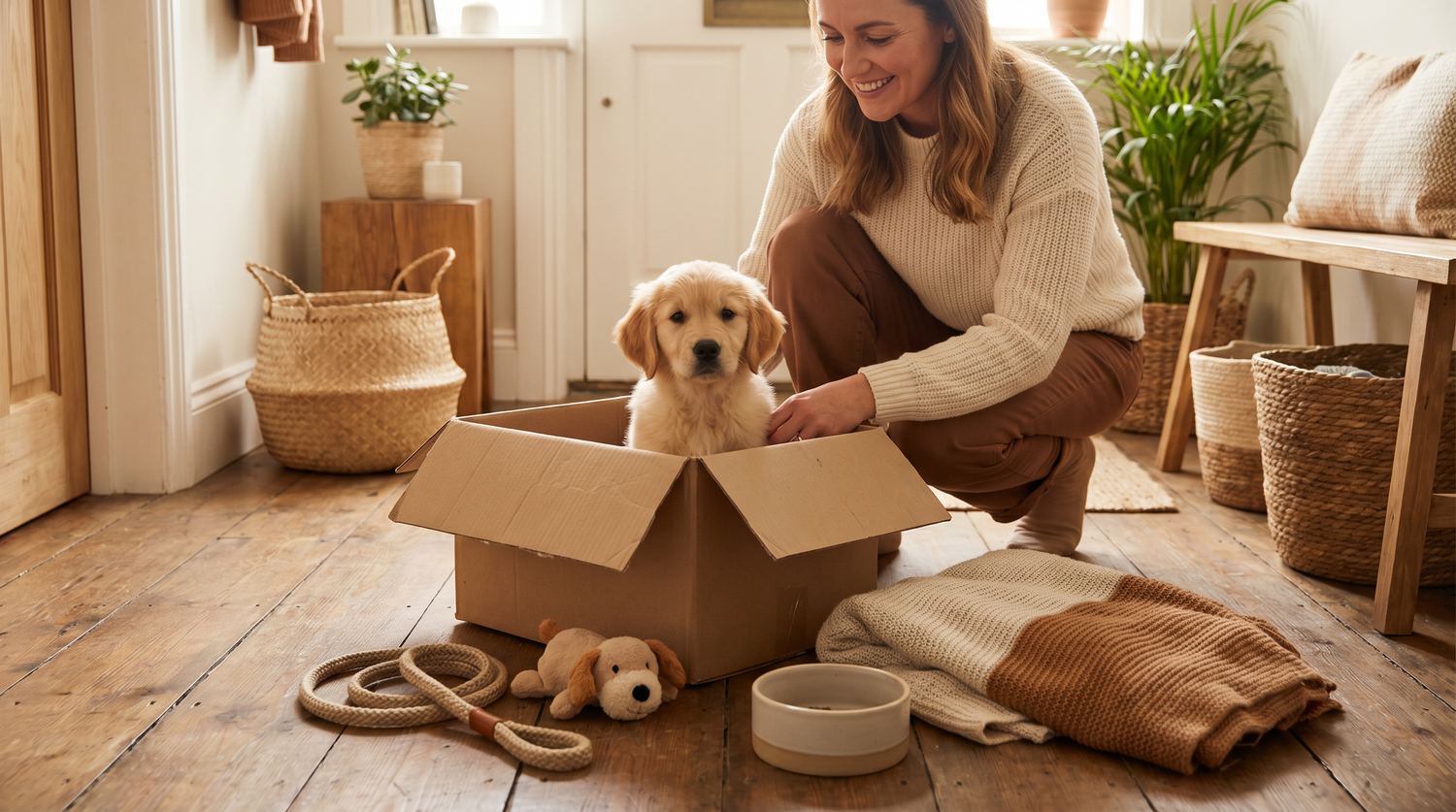
New Puppy Checklist: The Things You Actually Need (And the Things Nobody Warns You About)
Your Amazon cart has 47 items in it, your Google history is 80% "best puppy products," and pickup day is in 72 hours. You need about 12 of those 47 things. Here's which ones — and everything your breeder, your vet, and every cheerful listicle on the internet forgot to mention.
What You Actually Need (The Short List)
This is the first-time puppy owner checklist stripped to the essentials. Not the aspirational version. The one a friend who's been through it texts you at 10pm when you're panic-shopping. If you're trying to figure out what to buy for a new puppy without spending $800 before pickup day, start here. Get these. Skip the rest for now.
Food & Water
- Puppy food — Ask your breeder or rescue what they've been eating and start there. Switching food abruptly causes stomach chaos you do not want in week one.
- Stainless steel bowls — Two of them. Stainless doesn't harbor bacteria the way plastic does. Get a size appropriate for the breed they'll become, not the potato they currently are.
- Measuring scoop — Overfeeding a puppy is easy. Portion control matters for growing joints. The scoop on the bag is your friend.
Skip the elevated feeder for now. The research on raised bowls and bloat in large breeds is mixed enough that you don't need to think about it in week one.
A Place to Sleep
- Crate with a divider panel — Size the crate for their adult size, use the divider to make it appropriately small for now. A puppy who has too much space in a crate will use the back corner as a bathroom. You don't want that.
- A washable bed or old towel — That's it. The memory foam orthopedic luxury bed can wait until they've proven they won't eat it.
Walking Gear
- Collar with ID tag — Get this before they come home. Name, your phone number. Non-negotiable.
- 6-foot leash — Standard. Leather or nylon. Whatever you'll actually use.
- Poop bags — Buy the giant roll. You will go through more than you think.
A harness is a great tool once you start real leash training, but it's not a day-one emergency. Retractable leashes, though — hard no. They teach puppies that pulling works, they can snap, and they've caused more than a few hand injuries. Leave them on the shelf.
Chewing & Entertainment
- 2–3 chew toys — A KONG (stuff it with peanut butter and freeze it for a long distraction), a Nylabone appropriate for their size, and one rope toy. Done.
- One squeaky toy — They will lose their mind over it. You will lose your mind over the sound. Worth it.
Puppies don't need 20 toys. They need 3 good ones and your attention. A toy pile the size of a toddler's Christmas haul doesn't make them happier — it just makes it harder to redirect them away from your shoes.
The Cleanup Kit
- Enzymatic cleaner — This is non-negotiable. Write it down. Enzymatic cleaner (Rocco & Roxie, Nature's Miracle — pick one) is the only thing that breaks down the proteins in urine so your puppy doesn't smell it and think "bathroom here." Regular cleaner just spreads it around. You will absolutely need this.
- Paper towels — In bulk.
- Puppy pads — Optional, and a personal choice based on your training philosophy. Some trainers love them; some say they teach puppies that inside is acceptable. Decide ahead of time so you're consistent.
Grooming Basics
- A brush suited to their coat — Slicker brush for double-coated or medium breeds, dematting comb for anything long, rubber grooming glove for short-haired dogs.
- Puppy shampoo — Look for something fragrance-free and gentle. Their skin is sensitive.
- Nail clippers — And the confidence to use them. Start handling their paws and ears from day one even if you're not clipping yet. Touch, treat, repeat. It matters more than you'd think when grooming day comes.
What You Don't Need Yet
Save your money and your sanity. This is the part of the puppy supply list nobody includes:
- A giant dog bed — Buy for the dog they'll be, not the dog they are. But buy it after month two, when you know if they're a chewer.
- 15 toys at once — Start with three. See what style they prefer (squeaky? chewy? tug?). Then invest in more of what actually gets played with.
- Matching outfits — Okay, maybe one. We're not here to tell you how to live. (And if you do want to make it official, dog mom hoodies are a perfectly reasonable purchase.)
- A DNA test — Fun? Yes. Urgent? No. Wait for their birthday. Make it an event.
- Every supplement on the shelf — Joint supplements, probiotics, omega-3s — some of these are genuinely useful and your vet will tell you which ones actually apply to your specific dog. Don't supplement blindly.
The Things Nobody Warns You About
This is the part of the new puppy checklist that Chewy and the AKC don't cover — the new puppy essentials that aren't things you can put in a cart. Not because they don't care, but because you can't sell it, and it doesn't fit in a bullet point. Consider this your survival guide for the first two weeks.
You will cry. Probably night one. Possibly night two. You'll be sitting on the floor next to the crate at 2am because your puppy is whining and you can't decide if you're a monster for not picking them up or a pushover for considering it. You'll be exhausted and questioning every decision that led you here, including this one. This is completely normal. You're not failing. You're just new at this, and so are they.
You will google "is it normal for my puppy to..." roughly 40 times in the first week. The hiccups are normal. The zoomies at 9pm are normal. The dramatic flop onto the floor when you stop petting them is very normal. Eating a little grass is usually fine. But you'll look it up anyway. That's fine too.
Your schedule no longer belongs to you. You used to sleep until 8. Maybe 9 on weekends. Now 5:47am is your alarm clock, and it has teeth. Puppies don't sleep in. They don't understand weekends. They wake up and immediately need to go outside, and if you're not fast enough, they let you know — loudly, and on the floor.
The first vet visit costs more than you expected. Budget $200–400 for the initial exam, first round of vaccines, deworming, and fecal test. This isn't a scam — it's what responsible puppy ownership costs upfront. Pet insurance is worth researching before the first visit, not after, because most policies don't cover pre-existing conditions. Get it early.
They will destroy something you love. A shoe. A pillow. The corner of a baseboard you never noticed until it was gone. Maybe something genuinely irreplaceable. Accept this now, before it happens, so the grief is lighter when it does. Puppy-proofing helps. It doesn't prevent everything. Keep the good stuff off the floor.
You will fall in love faster than you thought possible. Somewhere around day three, the puppy will fall asleep directly on your chest — warm, heavy, completely trusting — and you will think: this was the best decision I have ever made in my entire life. You'll mean it. And you'll be right.
If you want to read more about navigating this season, how to be a good dog mom covers the mindset shift that comes with it. And if you've already lost three hours to puppy content and found yourself narrating your dog's inner monologue, go ahead and confirm it: signs you're already a dog mom.
The First Week Schedule
Routine is your best tool. Puppies aren't defiant — they're confused. Consistency is what turns confusion into confidence — and it's the one thing you won't find on any first-time puppy owner checklist but matters more than anything on the supply list. Here's a rough framework for the first seven days:
- Day 1: Let them explore at their own pace. Don't invite everyone over. Don't overwhelm them with new people, new sounds, new everything all at once. Establish the three locations that matter: where they eat, where they sleep, where they go outside. Keep the energy calm.
- Days 2–3: Start crate training. Short sessions with the door open, treats tossed inside, meals fed in or near the crate. The crate should be a good place, never a punishment. Close the door briefly, open it before they panic. Gradually extend the time.
- Days 4–7: Lock in the routine. Same feeding times. Same outside schedule (after meals, after naps, first thing in the morning, last thing at night). Same bedtime. Puppies don't generalize well — they thrive on "this is just what we do."
- Week 2: Schedule the first vet visit if you haven't already. Start name recognition and basic commands — sit and come are the foundation everything else builds on. Keep training sessions short (5 minutes, several times a day) and end on a success.
And when you're ready to make it official — really lean into the dog mom identity you've now fully earned — check out our dog mom tees. Every purchase helps feed shelter dogs, which feels especially right when you're staring at a sleeping puppy thinking about how lucky you both are.
You're going to be fine. The puppy is going to be fine. Welcome to dog mom life.

Leave a comment
This site is protected by hCaptcha and the hCaptcha Privacy Policy and Terms of Service apply.